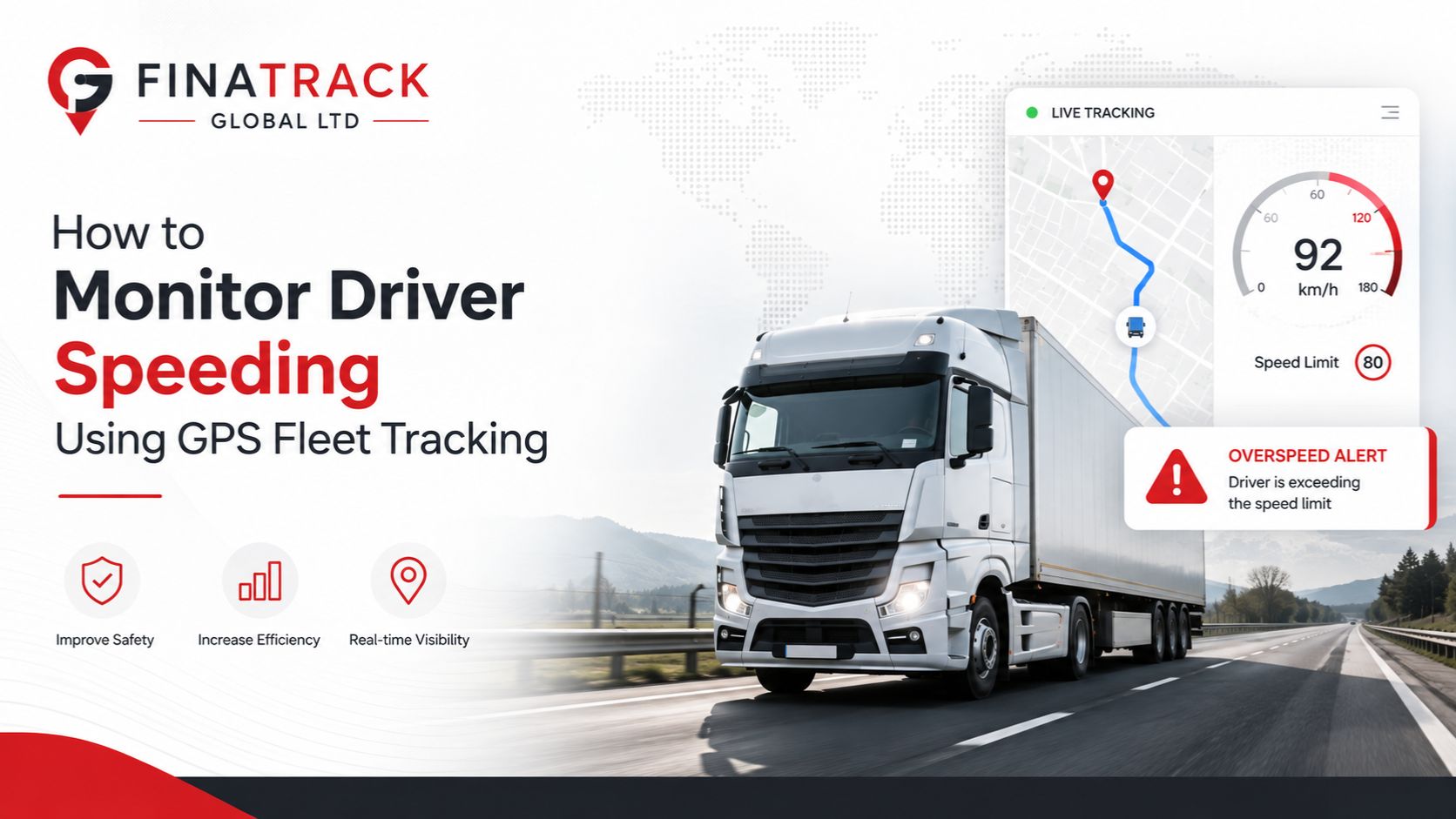
Speeding is one of the most difficult driver behaviours for a fleet manager to supervise once company vehicles leave the yard. A driver may follow company rules while operating near the office but begin driving significantly faster once they reach an open highway. Without technology, management may only discover the problem after receiving a complaint, traffic violation report, accident notification or unexpectedly high fuel bill.
GPS fleet tracking gives businesses a more systematic way to monitor vehicle speed. Modern telematics devices can continuously measure vehicle movement and create records when a configured speed threshold is exceeded. Some systems can also generate immediate alerts, allowing fleet managers to identify speeding while the vehicle is still on the road rather than discovering the behaviour several days later. Teltonika, for example, documents overspeeding functionality that monitors vehicle speed against a configured maximum and generates records when that limit is exceeded and when the vehicle returns to normal speed.
For businesses operating trucks, delivery vans, sales vehicles, service cars or other commercial fleets, this changes speeding management from guesswork into a data driven process. A manager no longer has to rely entirely on a driver’s explanation of how the vehicle was operated. The tracking platform can provide information showing which vehicle exceeded the configured threshold, when the event occurred and where the vehicle was travelling.
The first step is establishing an appropriate speed policy for the fleet. A company should not simply configure one arbitrary speed and apply it without considering the types of vehicles it operates, the roads they use and its internal safety requirements. The purpose of the monitoring system is to help enforce a clear operating policy rather than generate alerts without context.
Once the threshold is established, the GPS tracking device can monitor vehicle speed throughout a journey. When the configured maximum is exceeded, the system can create an overspeed event and transmit that information to the fleet platform. Depending on the equipment and configuration, the alert can be treated as a routine record or prioritised for faster transmission.
This gives fleet managers several pieces of useful information. They can identify the vehicle involved, the recorded speed, the location and the time of the event. When the tracking system also provides trip history, management can review what happened before and after the speeding incident rather than examining one isolated number.
Location provides particularly important context. A vehicle exceeding an internal fleet threshold on a highway presents a different situation from a vehicle travelling at the same speed in a congested commercial area, residential zone or company yard. GPS tracking allows the speed event to be linked with the vehicle’s geographical position, helping management understand the circumstances surrounding it.
Repeated events are often more useful than individual alerts. A single speeding incident may occur because of a temporary situation, an overtaking manoeuvre or another circumstance that deserves explanation. A driver who repeatedly exceeds company limits across several journeys presents a clearer pattern that management can investigate.
This is why fleet managers should avoid treating every electronic alert as an automatic disciplinary offence. The strongest use of telematics is to identify trends, compare drivers and understand recurring behaviour. Technology provides the evidence required to ask better questions, while management still needs to assess the circumstances fairly.
Driver coaching can then become more targeted. Instead of sending a general message telling all employees to slow down, a fleet manager can identify the drivers generating the highest number of speeding events and discuss specific journeys with them. The conversation becomes based on recorded behaviour rather than assumptions.
Businesses can also compare improvement over time. If a driver receives coaching after repeatedly exceeding the fleet’s speed policy, telematics can show whether the number and severity of speeding events falls during subsequent weeks. This creates a measurable approach to driver development rather than relying only on verbal warnings.
Speed data can become even more useful when combined with other driver behaviour information. Modern telematics devices can also detect events such as harsh acceleration, harsh braking and harsh cornering under appropriate configurations. Teltonika’s telematics systems, for example, can create records associated with these types of driving behaviour, allowing fleet managers to examine several indicators rather than speed alone.
A driver who occasionally exceeds a speed threshold but otherwise operates smoothly may present a different risk profile from one who combines repeated speeding with harsh braking and aggressive acceleration. The second pattern may deserve more urgent intervention because several risky behaviours are occurring together.
This is where fleet telematics becomes more powerful than basic location tracking. GPS tells the business where the vehicle is, while driver behaviour analytics help explain how it is being driven. Finatrack currently positions its fleet telematics solutions around driver behaviour insights, utilisation, route information and performance reporting for corporate fleets and SMEs.
Video telematics can add another layer of context. If an AI dashcam or road facing camera is integrated with the fleet system, management may be able to review footage associated with important driving events. This can help establish whether the speeding occurred on an open road, during an overtaking manoeuvre or alongside another behaviour that deserves attention.
Speed monitoring should also be considered alongside fuel management. Aggressive driving and unnecessary high speed can reduce operating efficiency, particularly in commercial fleets. The United States Federal Motor Carrier Safety Administration has studied telematics systems specifically in relation to safe and fuel efficient truck driving, reflecting the wider connection between driver behaviour monitoring, fleet safety and fuel performance.
For a business running one vehicle, small inefficiencies may appear insignificant. For a company operating twenty, fifty or one hundred vehicles, repeated speeding can influence fuel expenditure, maintenance demands, tyre wear and overall fleet risk. Monitoring behaviour across the entire fleet allows management to identify where intervention is most likely to produce meaningful results.
Speed alerts can also help businesses respond before a serious event occurs. Traditional fleet management often becomes involved after a collision or customer complaint. Telematics gives management an opportunity to identify repeated risky behaviour before an accident forces the issue.
This preventative approach is one reason onboard safety monitoring technologies have received attention in commercial transport. FMCSA research has examined whether onboard monitoring systems can reduce at risk behaviour and improve commercial driver safety performance.
However, businesses should avoid creating an alert system so sensitive that managers are overwhelmed with notifications. If every minor fluctuation generates an alert, genuine problems can become difficult to distinguish from normal driving activity. Thresholds and reporting rules should therefore reflect the fleet’s operational requirements.
The objective should be useful information, not maximum information.
A fleet manager may choose to receive immediate alerts only for serious speeding events while reviewing smaller violations through a weekly driver behaviour report. This gives management the ability to respond quickly to significant risks without spending the entire day reacting to minor notifications.
Reports are particularly useful for larger fleets. Rather than reviewing vehicles individually, management can compare drivers, routes, branches or vehicle groups. The business can identify which drivers generate repeated speeding events and whether problems are concentrated in certain operating areas.
The same information can support management meetings and driver safety programmes. Instead of discussing road safety only after an accident, businesses can review trends every week or month and identify areas requiring attention. This encourages safety to become part of normal fleet management rather than an emergency response.
Companies should also be transparent with employees about vehicle monitoring. Drivers should understand that company vehicles are fitted with GPS tracking and that information such as speed, location and driving events may be monitored for legitimate fleet management and safety purposes. Clear internal policies help establish how the information will be used and who is authorised to access it.
Monitoring should be designed to improve safety and accountability rather than become unnecessary workplace surveillance. The strongest approach gives employees clear expectations from the beginning and applies the same standards consistently across the fleet.
Fleet managers should also remember that GPS speed information is still electronic data and should be interpreted responsibly. Temporary technical issues, GPS conditions or configuration errors can occasionally affect data quality. Serious employment decisions should therefore consider the wider evidence available rather than relying blindly on one isolated reading.
Installation quality matters as well. The telematics device must receive reliable GNSS information and be configured correctly for speed monitoring to function as intended. Teltonika’s overspeeding functionality, for example, requires an active GNSS fix when GNSS is being used as the speed source.
This is why fleet operators should work with a professional tracking provider rather than viewing GPS tracking purely as a hardware purchase. The business needs correct installation, suitable configuration, a reliable monitoring platform and technical support when unusual data appears.
Finatrack Global Ltd provides GPS tracking and fleet telematics solutions for businesses in Kenya, including driver behaviour analytics, route insights, utilisation information and reporting. Its services are designed for SMEs, corporate fleets, asset finance partners and other organisations requiring greater control over vehicle operations.
The company provides installations from its Vision Plaza office on Mombasa Road in Nairobi and can also arrange installations at customer locations.
For businesses considering speed monitoring, the objective should not simply be to catch drivers breaking rules. The greater value lies in identifying risky patterns early, improving driver behaviour and creating a measurable safety culture across the fleet.
A fleet manager cannot sit beside every driver.
GPS telematics provides the visibility to know when intervention may be necessary.
When used professionally, speed monitoring can turn a simple GPS tracker into a practical driver management tool that helps businesses protect vehicles, employees and the wider operation.
For professional GPS fleet tracking and driver behaviour monitoring solutions in Kenya, contact Finatrack Global Ltd on 0723 645 810 or visit www.finatrack.co.ke.