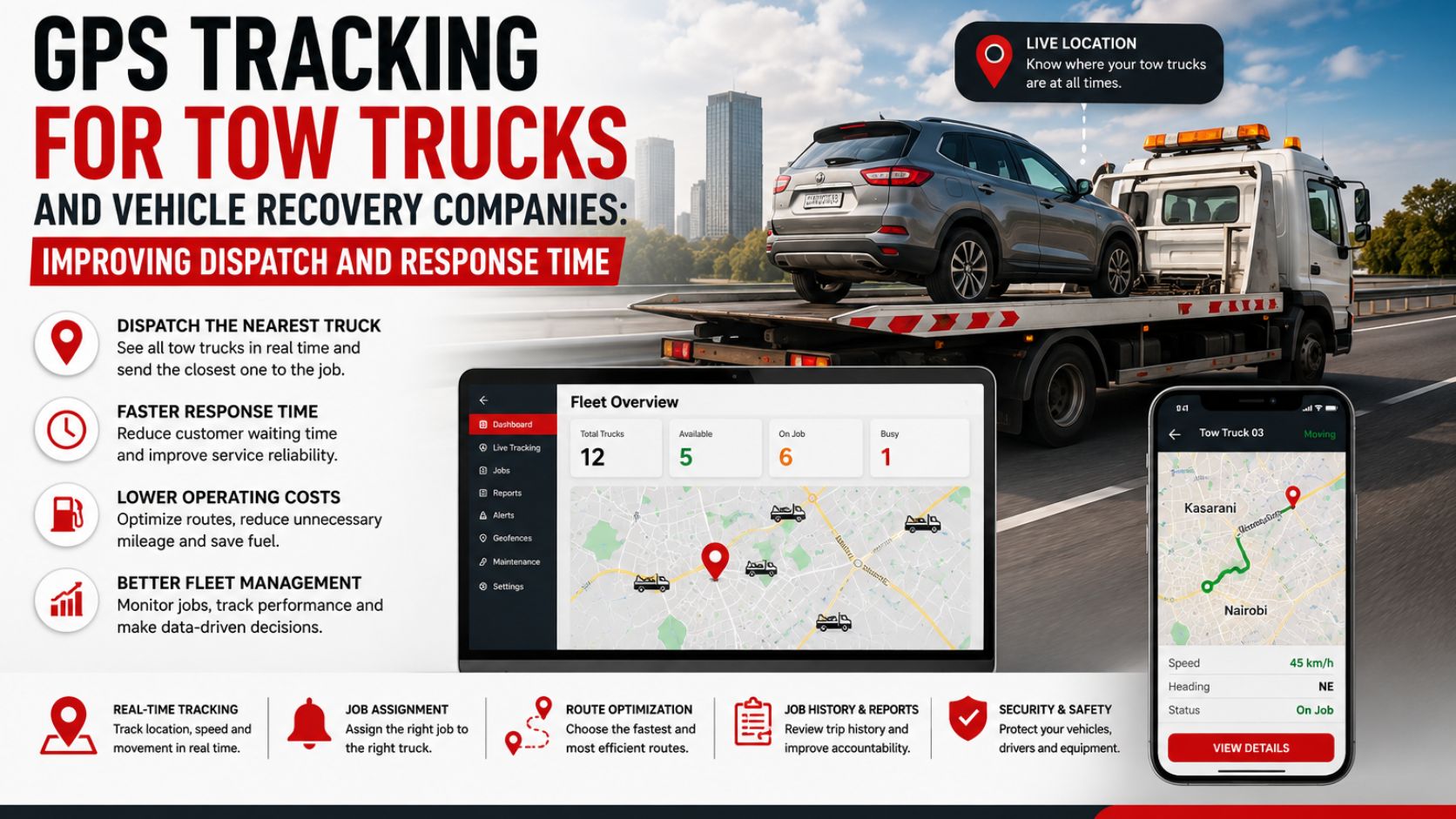
For businesses transporting electronics, pharmaceuticals, industrial equipment, construction materials, machinery parts or other high-value goods, the journey between the warehouse and the customer can be one of the most vulnerable stages of the supply chain. Once a loaded truck leaves the yard, management may have limited physical control over the vehicle until it reaches its destination.
That creates a serious commercial risk. A truck may deviate from its assigned route, stop unexpectedly, remain parked for too long or become unreachable. Even where the vehicle itself is eventually recovered, losing valuable cargo can expose the business to replacement costs, disrupted deliveries, customer complaints and damaged commercial relationships.
GPS tracking gives transporters and cargo owners greater visibility over vehicles while goods are in transit. Rather than depending entirely on telephone updates from drivers, authorised managers can check a vehicle’s current location through a tracking platform and review how the journey is progressing.
This visibility becomes particularly important when the value of the cargo is significantly higher than the value of the vehicle carrying it. A truck transporting expensive electronics, for example, may be carrying goods worth several times the cost of the truck itself. In such situations, vehicle security becomes part of cargo security.
A professionally installed GPS tracker can help management know when the vehicle leaves the loading point, which route it follows and whether it is moving towards the expected destination. If something unusual happens, the business has an opportunity to investigate while the journey is still underway rather than waiting until the truck fails to arrive.
Route monitoring is one of the most useful applications. High-value cargo is often transported using predetermined routes chosen for operational or security reasons. When a vehicle unexpectedly leaves that corridor, management should be able to notice.
Geofencing can help create virtual boundaries around approved routes, warehouses, customer premises or other important locations. Depending on the tracking system configuration, authorised personnel can receive alerts when the vehicle enters or leaves selected areas.
A route deviation does not automatically mean a security incident is taking place. Road closures, traffic congestion, police diversions, accidents and legitimate operational instructions can all force a driver to change direction. The advantage of tracking is that management can verify the reason while the deviation is happening.
That is considerably better than discovering hours later that a truck travelled through an unexpected area.
Unexpected stops deserve similar attention. Commercial vehicles naturally stop for fuel, loading, inspections, meals and other legitimate reasons. The risk arises when a vehicle carrying valuable cargo remains stationary for an unusually long period at a location that was not part of the transport plan.
GPS trip information can help management see where a vehicle stopped and approximately how long it remained there. The responsible fleet or security manager can then contact the driver or follow the company’s escalation procedure if the stop cannot be explained.
For high-value cargo, time matters. If a vehicle is being interfered with, waiting several hours before somebody notices can significantly reduce the chances of an effective response.
This is why businesses transporting valuable goods should avoid viewing GPS tracking simply as a map showing where vehicles are. The greater value comes from alerts, trip history and established procedures for responding when vehicle behaviour changes unexpectedly.
A business should know what happens when a truck deviates from its route. Someone should be responsible for verifying the situation. If the driver cannot be reached and the movement remains suspicious, the company should already have an agreed escalation process.
Technology without a response plan provides information but does not necessarily provide control.
Vehicle movement outside expected operating hours can also be significant. A loaded truck parked overnight at an authorised location should not begin moving unexpectedly without somebody knowing.
Ignition and movement alerts can provide additional visibility depending on the system installed. An alert generated at an unusual time gives the business an opportunity to determine whether the movement was authorised.
For higher-risk cargo, relying on one tracking device may not provide enough resilience. If a primary tracker is discovered, disconnected or damaged, the business could lose its main source of location information.
Layered tracking can reduce this dependence.
A wired GPS tracker can serve as the primary fleet-management device while a second wireless tracker or compact tracking tag provides an independent backup. The second device may be positioned differently and operate separately from the main installation.
The objective is not to make a vehicle impossible to steal. No security system can guarantee that.
The objective is to make it more difficult for one action to remove every layer of visibility.
The same principle applies to vehicle security itself. GPS tracking tells a business where a vehicle is or where it was last reporting, but preventing unauthorised operation requires additional controls.
An alarm system, immobilisation solution and appropriate physical security can complement tracking. Together, these systems create a more complete approach than depending on a tracker alone.
Cargo security also depends heavily on the driver. A driver may face pressure to complete journeys quickly, follow instructions from unknown individuals or stop at locations that appear harmless.
Companies transporting high-value goods should therefore combine vehicle technology with clear operating procedures. Drivers should understand authorised routes, approved stop locations, communication requirements and what to do if they suspect they are being followed or if someone attempts to interfere with the vehicle.
Speed monitoring can provide another layer of information. A vehicle travelling at unusually high speed may indicate unsafe driving, while sudden changes in movement may deserve review depending on the circumstances.
The purpose should not be to interpret every unusual event as a crime. Fleet data becomes most useful when several pieces of information are considered together.
Location, route, time, stop duration, ignition status and communication with the driver can provide a much clearer picture than any single alert.
Historical trip records can also become valuable after a cargo incident. Management may need to establish when the vehicle left the warehouse, which route it followed, where it stopped and when unusual movement began.
This information can support internal investigations and provide useful operational records when businesses are working with security teams, insurers or relevant authorities.
Where AI dashcams or video telematics are installed, the company may gain additional context. GPS information may show that a truck stopped unexpectedly, while video can potentially help explain what was happening around the vehicle at the relevant time.
Video can also assist when there are conflicting accounts surrounding a road incident, attempted interference or accident.
For businesses transporting valuable cargo regularly, this type of information can become part of a broader risk-management system rather than being used only after something goes wrong.
Transport companies can also use tracking to improve communication with customers. A customer expecting a high-value delivery may need reassurance that the shipment is progressing according to plan.
Instead of repeatedly calling the driver, authorised operations staff can check the vehicle’s progress and provide more informed updates.
This is particularly useful where deliveries need to be coordinated with security teams, warehouse personnel or unloading crews. Knowing that a vehicle is approaching the destination allows the receiving team to prepare before the truck arrives.
Better coordination can also reduce the amount of time valuable cargo spends stationary outside customer premises waiting for gates to open or unloading arrangements to be made.
That matters because unnecessary waiting can create additional exposure.
A truck carrying expensive goods should ideally spend as little unnecessary time as possible sitting in predictable or uncontrolled locations.
GPS tracking can help businesses understand these delays and redesign transport procedures where necessary.
Some companies may discover that vehicles repeatedly spend long periods outside the same warehouse. Others may find that loading schedules result in trucks travelling at times when security risk or traffic congestion is higher.
Fleet data can therefore contribute to operational planning as well as security.
Businesses should also control who has access to vehicle location information. A truck carrying valuable cargo creates sensitive operational data.
Not every employee needs to know where the vehicle is, what it is carrying or when it will reach a particular destination.
Tracking accounts should therefore be restricted to authorised personnel with a legitimate operational, security or management responsibility. Passwords and user permissions should be managed carefully, particularly when employees leave the organisation or change roles.
The same discipline should apply to drivers and third-party transporters. Where cargo is being moved by contracted vehicles, businesses should establish clearly what visibility they require and how tracking information will be shared during the journey.
Professional installation is equally important. High-value cargo security should not depend on a tracker fitted casually or positioned in an obvious location.
The tracking system should be installed discreetly and tested properly before the vehicle is placed into operation. Management should also confirm that the system is reporting consistently and that the people responsible for monitoring it know how to use the platform.
A sophisticated tracking system provides little protection if nobody notices that a device has been offline for several hours.
This is why routine checks matter. Businesses transporting valuable cargo should confirm tracker status before critical journeys and investigate unexplained offline periods rather than assuming the system will always work automatically.
Where the risk justifies it, a backup tracking layer can provide additional reassurance.
The cost of protecting a vehicle should also be considered against the value of the goods being transported. Spending money on tracking, alarms, backup devices and monitoring procedures can appear expensive until it is compared with the potential loss from a single high-value cargo incident.
The financial damage may include much more than replacing the goods.
The company may face delayed customer orders, penalties, additional transport costs, insurance consequences and reputational damage. A major loss can also affect future relationships with clients who expect their goods to be transported securely.
Good cargo security therefore protects both assets and commercial confidence.
For fleet managers, the most important shift is moving from reactive security to active visibility.
Waiting for a driver to miss a delivery before checking where the truck is can waste valuable time. Monitoring key journeys, setting sensible alerts and having a clear escalation process gives the business a better chance of identifying unusual activity earlier.
Finatrack Global Ltd provides professionally installed GPS tracking, wireless tracking, tracking tags, vehicle security systems, AI dashcams and fleet telematics solutions for businesses transporting valuable goods in Kenya.
Solutions can be configured according to the type of vehicle, operational environment and level of security required. Installation can be arranged at the customer’s convenient location or at Vision Plaza, 1st Floor, Office 2, Mombasa Road, Nairobi.
For transporters, distributors, logistics companies and businesses moving high-value cargo, contact Finatrack Global Ltd on 0723 645 810 or visit www.finatrack.co.ke.
When the cargo is valuable, knowing that the truck left the warehouse is not enough. The business should maintain visibility until both the vehicle and the goods reach their destination.