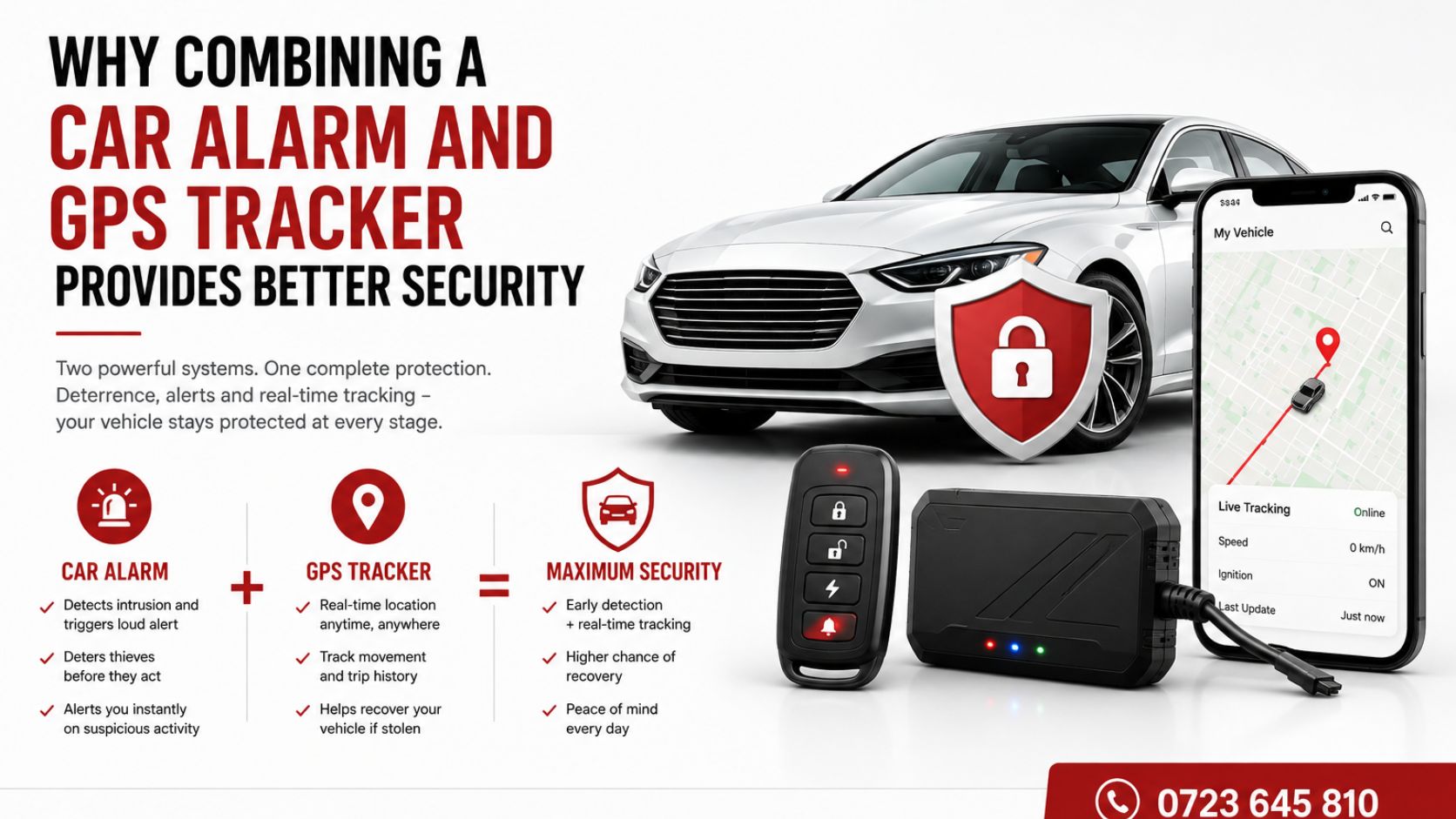
Vehicle security works best when different systems perform different jobs. A car alarm is designed to warn when somebody interferes with a vehicle, while a GPS tracker is designed to show where the vehicle is and how it is moving. When the two are combined, the owner gains both an early warning system and a way to monitor the vehicle if it is taken.
A car alarm is usually the first line of defence. It can respond to unauthorised entry, door opening, impact or other forms of interference depending on the system installed. The sound can attract attention, alert people nearby and discourage an opportunistic thief before the vehicle is successfully moved.
The limitation is that an alarm mainly helps at the point of intrusion. If a thief manages to silence, bypass or ignore the alarm and drive the vehicle away, the owner may have little information about where the car has gone. This is where GPS tracking adds a second and very different layer of security.
A professionally installed GPS tracker allows an authorised vehicle owner to monitor the car through a smartphone or computer. Depending on the tracking system, the platform may provide real-time location, trip history, ignition alerts, geofencing, speed information and other security notifications.
The combination is therefore stronger because one system helps detect interference while the other provides continued visibility. An alarm may tell you that somebody is attempting to access the vehicle. A GPS tracker can help you establish what happens next.
Consider a vehicle parked outside a home or office. If somebody forces entry, the alarm may activate immediately. If the vehicle is then driven away, the GPS tracker can continue providing location information, allowing the owner to contact the tracking provider and share relevant details with the police or authorised recovery personnel.
Ignition alerts can make this combination even more useful. If the tracker reports that the ignition has been switched on unexpectedly, the owner can check the vehicle location immediately. This creates another warning channel even if the audible alarm was not heard.
Geofencing provides a similar advantage. A virtual boundary can be created around a home, office, yard or another location. If the vehicle leaves that area unexpectedly, the tracking platform can generate an alert, giving the owner an opportunity to respond quickly.
The key benefit is redundancy. Vehicle security becomes weaker when everything depends on one device. If the alarm fails, the tracker may still provide useful information. If the owner misses an alarm notification, GPS movement alerts may provide another warning. If a thief succeeds in entering the car, location tracking can remain active after the initial security barrier has been defeated.
For higher-value vehicles, this principle becomes even more important. The financial consequences of losing a vehicle worth several million shillings can be significant, which makes it reasonable to use several independent security layers rather than relying on one inexpensive device.
A car alarm and GPS tracker can also work alongside an immobiliser or hidden cut off system. The alarm detects intrusion, the immobiliser makes the vehicle harder to start, and the tracker provides visibility if the car moves. Each technology addresses a different stage of a possible theft.
Some wired GPS tracking systems can also support remote engine immobilisation. When professionally installed and safely configured, this functionality may allow an authorised user to prevent the vehicle from being restarted under appropriate circumstances. This should never be used carelessly on a moving vehicle where sudden immobilisation could create a road-safety risk.
A wireless backup tracker can provide another useful layer. If a thief locates and disconnects the main wired tracker, a separate battery-powered device positioned elsewhere in the vehicle may continue providing location information. This makes it more difficult for one action to defeat the entire tracking strategy.
Professional installation is critical when combining security systems. An alarm, immobiliser and GPS tracker all interact with the vehicle electrical system in different ways. Poor wiring can create faults, unreliable alerts or devices that fail when they are needed most.
The installer should also consider concealment. A tracker placed in an obvious location may be easier to remove, while a hidden cut off installed predictably can lose much of its value. Good installation should balance accessibility for maintenance with discreet placement and reliable operation.
Vehicle owners should also understand that no combination of security technologies can guarantee that a car will never be stolen. Determined criminals may attempt to bypass alarms, interfere with wiring or disable tracking communication. The objective of layered security is to make theft more difficult, increase the time required to defeat the vehicle and improve the owner’s chances of detecting and responding to suspicious activity.
Early detection is particularly important. The longer a stolen vehicle remains unnoticed, the more time a thief has to move it, hide it, interfere with its security systems or change its identifying features. An alarm and tracking system working together can reduce the period between the beginning of an incident and the owner’s awareness of it.
This is why mobile access is valuable. A vehicle owner may not be close enough to hear the alarm, especially if the car is parked at an office, shopping centre or another location. GPS notifications can provide additional awareness even when the owner is several kilometres away.
Businesses can gain even more value from the combination. A company may operate delivery vans, field vehicles or commercial cars that are rarely parked at headquarters. GPS tracking gives management visibility over those vehicles throughout the day, while alarms and immobilisation systems improve physical security when the vehicles are left unattended.
Trip history also creates accountability. If a company vehicle moves outside authorised hours, management can review where it travelled and when it returned. This transforms the tracking system from a theft-recovery tool into a broader fleet-management resource.
The same principle applies to financed vehicles. A bank, SACCO or microfinance institution may require tracking because the vehicle secures an outstanding loan. The borrower can still benefit from installing an alarm because the two systems protect the same asset in different ways.
For private motorists, the choice should therefore not always be framed as car alarm versus GPS tracker. The stronger question is whether the vehicle would benefit from both.
An alarm alone can warn that someone is interfering with the car, but it cannot reliably tell you where the vehicle has gone after it disappears.
A GPS tracker alone can show movement, but it may not provide the same immediate physical deterrent as a sounding alarm at the point of intrusion.
Together, they provide a more complete security response.
The alarm focuses on deterrence and detection.
The tracker focuses on visibility and recovery.
When immobilisation and backup tracking are added, the system becomes stronger still.
Vehicle owners should also maintain the systems after installation. An alarm should be tested periodically, GPS communication should be checked, and tracking account credentials should remain secure. A security system that was installed several years ago but never tested may provide false confidence if a fault has developed.
Account access deserves particular attention. The tracker may be physically hidden, but weak or shared passwords can expose vehicle location information remotely. Only trusted users should have access to the tracking platform, and businesses should remove access when employees change roles or leave the organisation.
The strongest vehicle security strategy is therefore based on layers rather than a single product. A thief should ideally encounter several independent barriers before successfully taking the vehicle, while the owner retains the ability to see what is happening if one of those barriers fails.
Finatrack Global Ltd provides GPS tracking, car alarms, vehicle immobilisation, backup tracking and other vehicle security solutions for private motorists and businesses in Kenya.
For motorists looking for stronger protection, combining a professionally installed car alarm with GPS tracking can provide both early warning and continued visibility over the vehicle.
One system tells you someone may be trying to take your car.
The other helps you know where it goes if they succeed.
For professional vehicle security and GPS tracking solutions in Kenya, contact Finatrack Global Ltd on 0723 645 810 or visit www.finatrack.co.ke.