Selling a company vehicle may look straightforward: agree on the price, complete the transfer, hand over the keys and remove the vehicle from the fleet register. For a vehicle fitted with GPS tracking, however, there is another important step that businesses can easily overlook.
The tracking system does not automatically disappear when ownership changes.
A GPS tracker may still be physically installed in the vehicle, connected to the battery, registered on the company’s tracking platform and associated with historical trip information. If this is not handled properly before or immediately after the sale, the previous owner may continue receiving vehicle information even though the asset now belongs to somebody else.
For businesses operating several vehicles, this is particularly easy to miss. Fleet managers may concentrate on the sale documents, insurance cancellation, asset register and accounting records while the tracking device remains active in the background.
The first question management should ask before selling a tracked vehicle is simple: will the GPS tracker remain with the vehicle or will it be removed?
If the tracking system belongs to the company and can be reused, removing it before handover may make commercial sense. A professionally installed tracker can often be transferred to another suitable company vehicle rather than being surrendered together with the asset being sold.
Removal should ideally be handled professionally. GPS trackers are often connected to vehicle electrical systems and may also be integrated with features such as ignition detection or remote immobilisation. Disconnecting wires casually can damage the installation or create electrical problems for the buyer.
Where the tracker will remain in the vehicle, ownership of the tracking service should be dealt with separately from ownership of the car. Handing over the keys does not automatically transfer access to the tracking platform.
The previous company should ensure that the vehicle is removed from its tracking account or that a formal transfer process is completed with the tracking provider where appropriate. The new owner should then receive their own authorised access rather than continuing to use the previous company’s login credentials.
Sharing the old username and password is not a good solution.
A tracking account may contain more than one vehicle. Giving a buyer access to an existing company account could expose locations, trip histories and operational information relating to the rest of the fleet.
Even where the account contains only one vehicle, businesses should avoid transferring passwords between unrelated owners. Account ownership should be properly changed so that responsibility for the vehicle and responsibility for the tracking data are aligned.
Historical trip information also deserves attention.
A company vehicle may have accumulated months or years of records showing customer visits, employee movements, warehouse locations, project sites and other commercially sensitive information. Selling the vehicle does not mean the buyer should automatically receive access to all of that history.
The business should determine what historical information needs to be retained for legitimate internal purposes and what access the new owner should receive from the date of transfer.
The exact capabilities will depend on the tracking platform being used, but the principle should remain clear: the new owner’s tracking relationship should begin with the new ownership period rather than providing unnecessary access to the seller’s previous fleet operations.
Remote immobilisation is another feature that should never be forgotten during a vehicle sale.
Some professionally installed GPS tracking systems allow authorised users to send commands associated with vehicle immobilisation or engine control, depending on how the system has been configured. If a former owner retains that capability after the vehicle has been transferred, an obvious security and operational problem exists.
The seller should ensure that any remote control permissions associated with the old account are removed or transferred appropriately. A buyer should never discover after purchasing a vehicle that somebody from the previous company can still send commands to it.
The same applies to employees who previously managed the vehicle.
Fleet managers, security officers and other staff members may have individual logins to the company’s tracking platform. When vehicles are sold, administrators should check whether those users still have unnecessary access to the asset.
This is good fleet-management practice even before vehicles are sold. Tracking-platform permissions should reflect current responsibilities rather than remaining unchanged indefinitely.
A company should also check for secondary tracking devices.
Higher-risk vehicles are sometimes fitted with more than one security layer. A primary wired GPS tracker may be accompanied by a wireless tracker, tracking tag or other backup location device.
It is possible to remove the main tracker and forget that another device remains hidden in the vehicle.
Before handing over a vehicle, the fleet or security team should therefore review the original installation records. If the company has used layered tracking, every device associated with the vehicle should be accounted for.
This becomes especially important for wireless devices powered by internal batteries. Unlike a wired tracker, a backup device may continue transmitting after the vehicle has been sold because it does not depend on the vehicle’s main electrical system.
The seller should decide whether the device is being transferred with the vehicle or recovered for reuse.
Car alarm systems and hidden cut-off switches deserve the same attention.
A company may have installed additional security equipment beyond GPS tracking. The buyer should understand what systems remain fitted and how they operate.
If an alarm, immobiliser or hidden cut-off system remains in place, the new owner should receive the necessary remotes, access methods and operating instructions. A security feature becomes a liability when the new owner does not know it exists or cannot operate it properly.
For vehicles with sophisticated installations, a professional handover can prevent confusion later.
The company selling the vehicle should also check whether emergency contacts are still registered on the tracking account. A fleet system may be configured to send alerts to a transport manager, security officer or company director.
After ownership changes, those alerts should no longer continue reaching the seller unless there is a specific transitional arrangement.
Imagine selling a vehicle and continuing to receive ignition alerts every morning when the new owner starts it. Apart from being inconvenient, this is a clear indication that the tracking relationship was never properly closed.
Notifications are often overlooked because they may be configured through several channels. The system may send app notifications, emails, SMS alerts or other messages depending on the provider and setup.
Each should be reviewed as part of the disposal process.
Businesses should also confirm that the sold vehicle has been removed from routine fleet reports. Monthly mileage summaries, movement reports and operational dashboards can become misleading when vehicles that no longer belong to the company remain active.
A fleet manager may eventually find an unexplained vehicle accumulating kilometres in reports because the asset was sold months earlier but never removed from the platform.
Clean fleet data matters.
When an asset leaves the company, the systems used to manage that asset should reflect the change.
Installation certificates and tracking records should also be reviewed. Many professional tracking installations generate documentation identifying the vehicle and installed device.
If the tracker is removed for installation into another vehicle, the old records should not simply be reused. The tracking provider should create appropriate documentation linking the equipment to the new vehicle where necessary.
This helps prevent confusion later when technical support, fleet audits or security investigations require confirmation of which device belongs to which vehicle.
Where the vehicle is being sold with the tracker installed, the seller should clearly explain this to the buyer rather than allowing them to discover the device later.
A hidden tracking unit discovered unexpectedly can understandably create concern. Transparency during the sale prevents misunderstandings and gives the new owner an opportunity to decide whether they want the system transferred, removed or replaced.
The new owner may also prefer to install their own tracking solution.
In that case, the previous company should professionally remove its equipment before the vehicle is handed over. This creates a clean separation between the seller’s security systems and those chosen by the buyer.
Company vehicles purchased through financing arrangements may require additional attention.
A tracking device may have been installed because of requirements connected to an asset-finance arrangement, lender or other third party. Before removing such equipment, the seller should confirm whether any outstanding obligations remain.
A vehicle that has fully completed its financing arrangement may be treated differently from one whose ownership or security interests are still being resolved as part of the sale.
The key principle is not to assume that every tracker fitted to the vehicle belongs entirely to the seller.
The company should know who installed it, why it was installed and who has authority over it before making changes.
This is another reason proper fleet records matter.
Businesses that maintain records of tracker serial numbers, installation dates, vehicle registrations and system ownership will find the disposal process much easier than companies that simply know “there is a tracker somewhere in the car.”
A practical vehicle-disposal process should therefore involve more than the finance department.
Fleet management, security, administration and IT or system administrators may all need to confirm that the vehicle has been removed from relevant systems. The exact process will depend on the size of the organisation, but somebody should take clear responsibility for closing the tracking account associated with the asset.
The process should ideally happen before the keys are handed over.
Waiting until several weeks after the sale increases the possibility of forgotten devices, unnecessary location access and confusion between the buyer and seller.
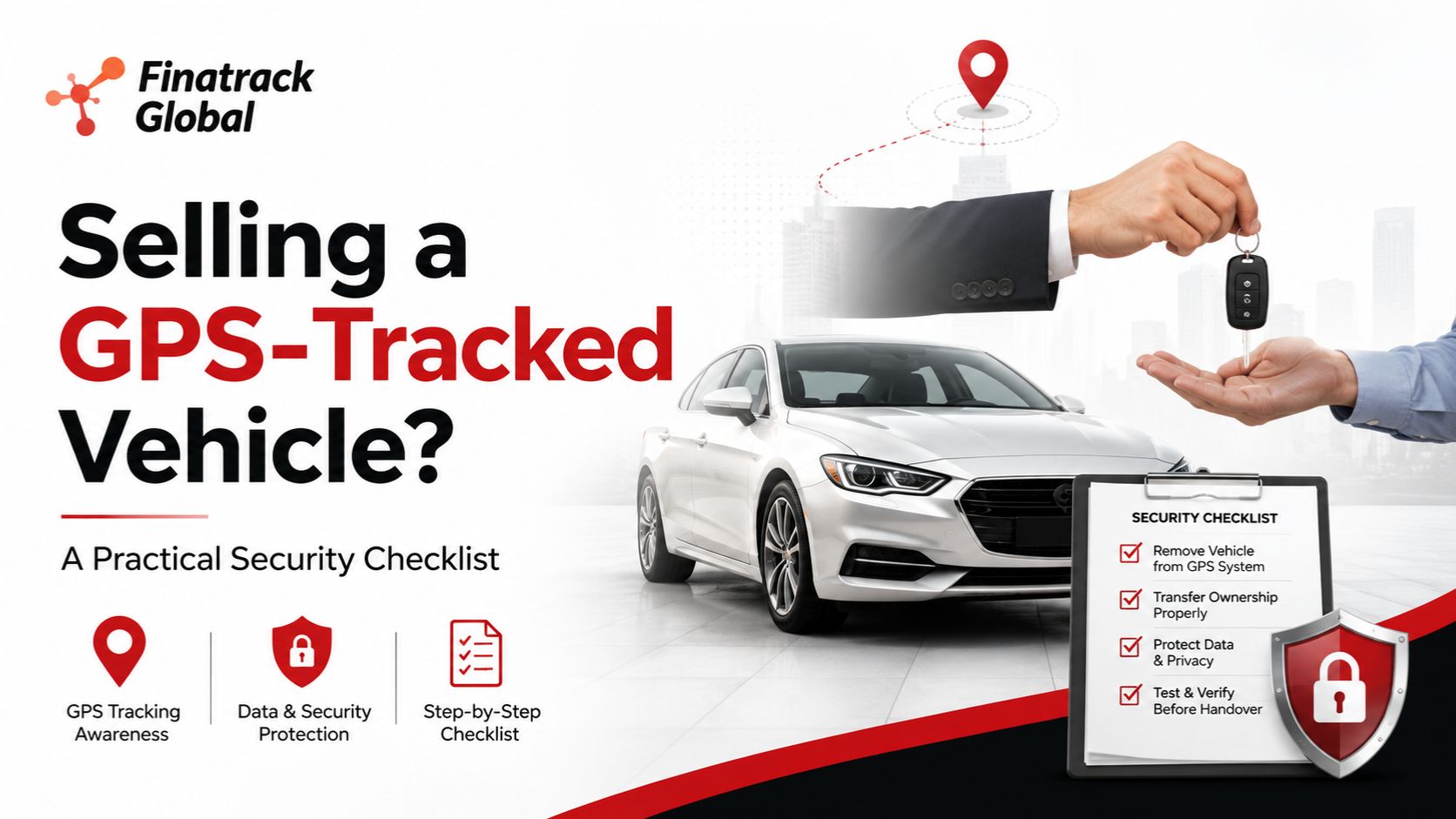
A simple internal checklist can prevent most of these problems. Confirm whether the tracker is being removed or transferred. Check for backup tracking devices. Review immobilisation permissions. Remove the vehicle from company tracking accounts. Update notification recipients. Record the final device status. Make sure the buyer understands any security equipment remaining in the vehicle.
The business should then confirm that the vehicle no longer appears as an active company asset.
That final check is important.
Administrative processes often fail not because nobody started them, but because nobody verified that they were completed.
A fleet manager may request that a vehicle be removed from the tracking system and assume somebody else handled it. A month later, it may still appear on the dashboard.
Before closing the vehicle-disposal file, management should log into the tracking platform and verify that the correct changes have actually taken effect.
Selling a vehicle fitted with GPS tracking is therefore not simply a vehicle transaction. It is also a technology and information-security handover.
The physical vehicle may leave the premises in a matter of minutes, but digital access can remain unless somebody deliberately removes it.
Businesses that regularly replace fleet vehicles should make GPS decommissioning part of their standard disposal procedure rather than treating it as an afterthought.
The same principle applies when vehicles are transferred between subsidiaries, branches or related companies. Even when the asset remains within the same corporate group, management should review who is responsible for monitoring it and who should have access to the tracking information.
Changes in custody should be reflected in the system.
Good fleet security is not only about installing technology. It is also about knowing when to remove it, transfer it and close access properly.
A GPS tracker provides valuable visibility while a vehicle belongs to the company. Once ownership changes, continuing that visibility without a legitimate reason can create unnecessary risk for both the seller and buyer.
Finatrack Global Ltd provides professionally installed GPS tracking, wireless tracking, tracking tags, alarms and vehicle security solutions for businesses and private vehicle owners in Kenya. Finatrack can also assist customers with the professional removal, reassignment or installation of tracking equipment when vehicles are replaced or sold.
For assistance with transferring or removing a GPS tracking system before selling a vehicle, contact Finatrack Global Ltd on 0723 645 810 or visit www.finatrack.co.ke. Professional service is also available at Vision Plaza, 1st Floor, Office 2, Mombasa Road, Nairobi.
When a company sells a vehicle, handing over the keys should not be the final step.
The digital keys should change hands too.