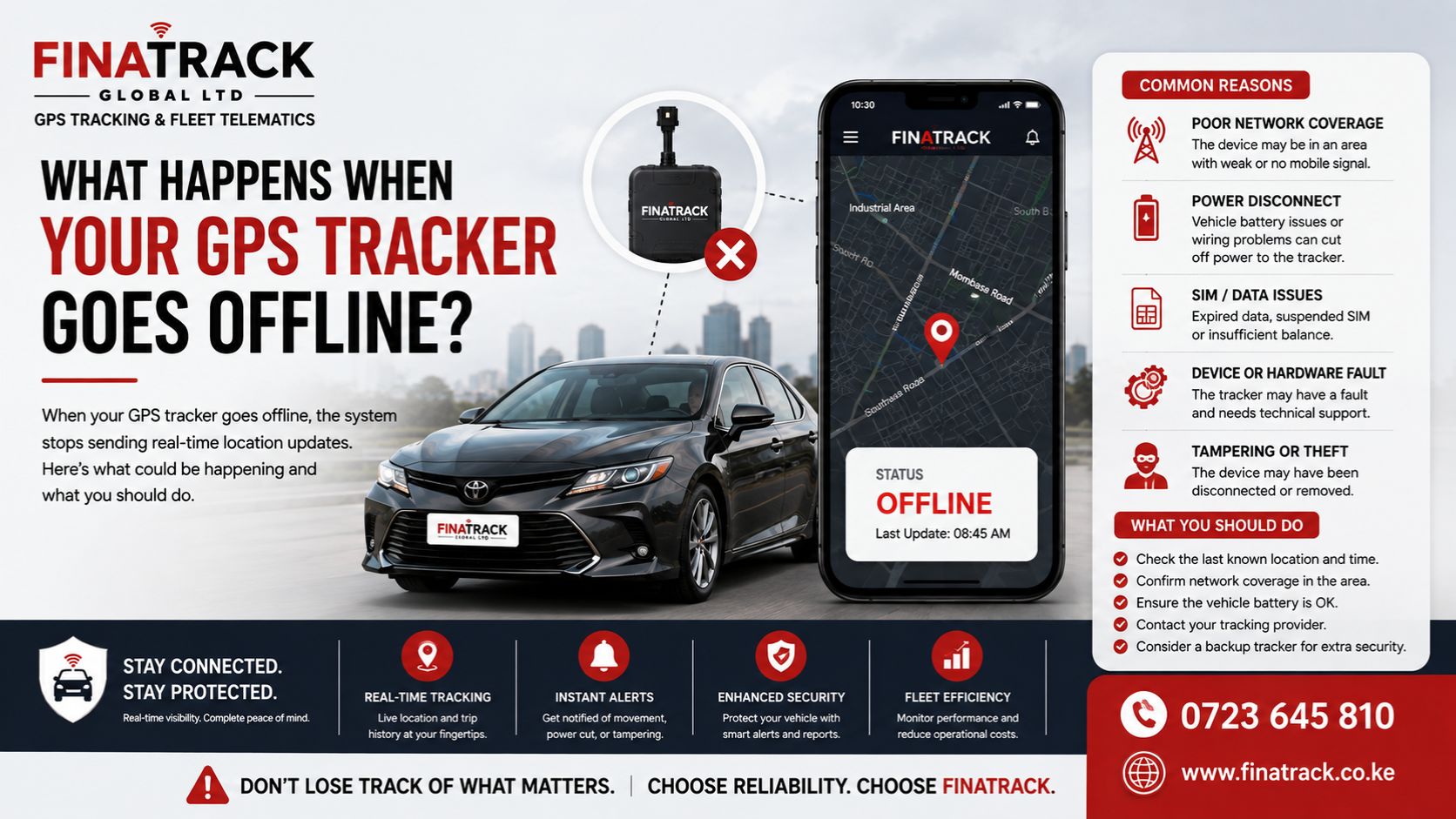
A GPS tracker going offline can be worrying, especially when the vehicle is still on the road or when the system is being relied on for security. For many motorists and fleet managers, the first assumption is that the tracker has stopped working completely or has been removed. In reality, an offline status can be caused by several different issues, ranging from temporary network loss to power problems, device faults or possible tampering.
The first thing to understand is that GPS positioning and communication are not the same thing. A vehicle tracker normally uses satellite signals to determine its location, but it relies on a mobile network or another communication channel to send that information to the tracking platform. This means the device may still know where the vehicle is even when it temporarily cannot transmit that location to the user.
Poor mobile network coverage is one of the most common reasons a tracker may appear offline. If a vehicle enters an area with weak or unavailable cellular coverage, the device may be unable to send its location to the server. The tracking platform may then continue displaying the last position received before communication was interrupted.
This is why the time of the last update is important. A vehicle may still appear on the map, but the position could be several minutes or even longer out of date. Users should always check when the latest location was received before assuming that the map pin represents the vehicle’s current position.
Some trackers can store location data internally when mobile communication is unavailable. Once the device reconnects to the network, the stored information may be transmitted to the platform, allowing the missing journey to appear in trip history. The exact behaviour depends on the tracking device and how the system has been configured.
Loss of power is another important cause of offline status. A wired GPS tracker normally receives power from the vehicle’s electrical system. If that power supply is interrupted because of a loose connection, damaged wiring, battery disconnection or another electrical problem, the tracker may stop transmitting.
Certain tracking devices include backup batteries that allow them to continue operating for a limited period after the main vehicle power is lost. In these systems, the user may also receive a power-disconnection alert, giving an early indication that something has changed within the installation.
A tracker that suddenly loses power while the vehicle is parked should therefore be investigated. The cause may be innocent, such as maintenance work or a weak electrical connection, but unexpected power loss can also be associated with tampering.
SIM card and connectivity issues can also cause a tracker to go offline. Many real-time GPS trackers use a SIM card to send data through a mobile network. If the SIM has expired, run out of data, been suspended or developed another communication problem, the tracker may stop updating even though the GPS hardware itself remains functional.
This is one reason vehicle owners should understand how connectivity is managed by their tracking provider. Some companies manage the SIM and data service as part of the tracking package, while others require customers to maintain connectivity separately. A tracker with expired communication service can create a false sense of security because the physical device is still installed but no useful information is reaching the user.
The tracker may also appear offline if the vehicle has been parked for an extended period. Some GPS tracking devices enter a low-power or sleep mode when the vehicle is inactive in order to reduce battery consumption. During this state, location updates may become less frequent until movement, ignition or another configured event wakes the device.
This is not necessarily a fault. The important question is whether the tracker resumes normal communication once the vehicle begins operating again.
Installation problems can also cause intermittent offline behaviour. Poor wiring, weak electrical connections or incorrect device placement can result in unreliable communication. A tracker that repeatedly goes offline during normal vehicle use should therefore be inspected rather than treated as a routine network problem.
A professionally installed GPS tracker should remain stable under normal operating conditions. If the same vehicle frequently disappears from the platform while other vehicles using the same system remain online, the issue may be related to the installation or the individual device.
Hardware failure is another possibility. Like any electronic equipment, GPS trackers can eventually develop faults. Heat, vibration, moisture, electrical surges or normal component failure can affect the device over time.
A tracking provider should be able to troubleshoot the system and determine whether the problem is related to power, communication, configuration or the tracker itself. In some cases, the device may need to be repaired or replaced.
For vehicle security, possible tampering should also be considered. A thief who discovers a tracking device may attempt to disconnect it or interfere with its power supply. If a previously reliable tracker suddenly goes offline at the same time that suspicious vehicle movement occurs, the incident deserves immediate attention.
This is where layered vehicle security becomes important. A vehicle that depends entirely on one wired GPS tracker can lose location visibility if that device is compromised. Adding an independent backup tracker provides another layer that may continue operating even if the primary system is disconnected.
A car alarm, immobiliser and hidden cut-off system can add further protection. The objective is to ensure that the failure of one security layer does not leave the vehicle completely exposed.
Signal interference can also affect tracking systems. GPS and mobile communication depend on radio signals, and deliberate jamming can disrupt positioning or data transmission. While ordinary network loss is more common than criminal interference, vehicles considered at higher risk may benefit from systems designed to detect unusual jamming activity.
Businesses operating fleets should pay particular attention to offline devices. One tracker disappearing temporarily may be a network issue, but several repeated outages can indicate a broader problem that requires investigation.
Fleet managers should monitor which vehicles are online, how long they have been offline and whether the same vehicles experience recurring communication failures. An offline tracker should not remain unnoticed for days or weeks simply because the vehicle continues operating normally.
This becomes especially important for financed vehicles, commercial fleets and high-value assets. If the tracker is required for security or risk management, the organisation should have a clear process for responding when a device stops reporting.
The first step should normally be to check the last location and last communication time. This gives the user an indication of when the system stopped updating and where the vehicle was at that point.
The second step is to determine whether the vehicle is currently in an area where poor network coverage is likely. If the vehicle is operating in a known low-signal location, temporary communication loss may explain the offline status.
The vehicle’s ignition and power history can also provide useful context if the tracking platform records these events. A sudden power loss immediately before the tracker goes offline may point toward an electrical problem or interference rather than ordinary network coverage.
If the vehicle is accessible, the owner should confirm that the vehicle battery is functioning normally and that no recent electrical work has been carried out. The tracker itself should not be unnecessarily exposed or rewired by someone unfamiliar with the installation.
When the cause is not obvious, the tracking provider should be contacted. A professional provider can often see technical information that is not visible to the customer and may be able to determine whether the device is communicating with the network, receiving power or generating error events.
For businesses, it is useful to maintain a clear escalation procedure. Fleet staff should know who to contact when a vehicle goes offline, how long they should wait before escalating the issue and when a technician should inspect the installation.
A tracker should also be tested periodically rather than only during an emergency. Vehicle owners can open the tracking application, confirm that the vehicle is online and compare the displayed position with the actual location. Businesses can include this check within routine fleet monitoring.
This is especially important because a tracking system may fail silently. If nobody checks the platform for several months, a problem may only be discovered after a theft or other incident occurs.
Trip history can provide another indication of tracker health. Missing sections of a journey, repeated gaps or unusual jumps between locations may suggest intermittent communication or positioning problems that deserve investigation.
The same principle applies to alerts. If ignition, movement or geofence notifications suddenly stop appearing even though the vehicle is being used normally, the system should be checked.
Vehicle owners should also distinguish between a tracker going offline and a tracker showing an inaccurate location. An offline tracker is not transmitting current information, while an inaccurate tracker is still communicating but reporting a position that does not precisely match the vehicle’s actual location.
These problems have different causes and should be investigated differently.
For a private motorist, a temporary offline status may simply be an inconvenience. For a business managing trucks, delivery vehicles or financed assets, repeated outages can create a serious operational and security gap.
That is why reliability should be one of the main factors considered when choosing a GPS tracking provider. The quality of the device matters, but so do professional installation, connectivity management, platform stability and after-sales support.
Finatrack Global Ltd provides GPS vehicle tracking and fleet telematics solutions for private motorists and businesses in Kenya. Customers can monitor vehicle location, trip history and other system information through the tracking platform, while technical support can help investigate devices that stop communicating.
So, what happens when your GPS tracker goes offline?
The system stops providing current information to the tracking platform until communication is restored.
The cause may be temporary network loss, a power problem, SIM connectivity, sleep mode, installation issues, equipment failure or possible tampering.
The important thing is not to assume.
Check the last update, consider where the vehicle is, review available alerts and contact the tracking provider when the cause is unclear.
A GPS tracker is most valuable when you can trust that it is working before you actually need it.
For professional GPS tracking and fleet telematics solutions in Kenya, contact Finatrack Global Ltd on 0723 645 810 or visit www.finatrack.co.ke.