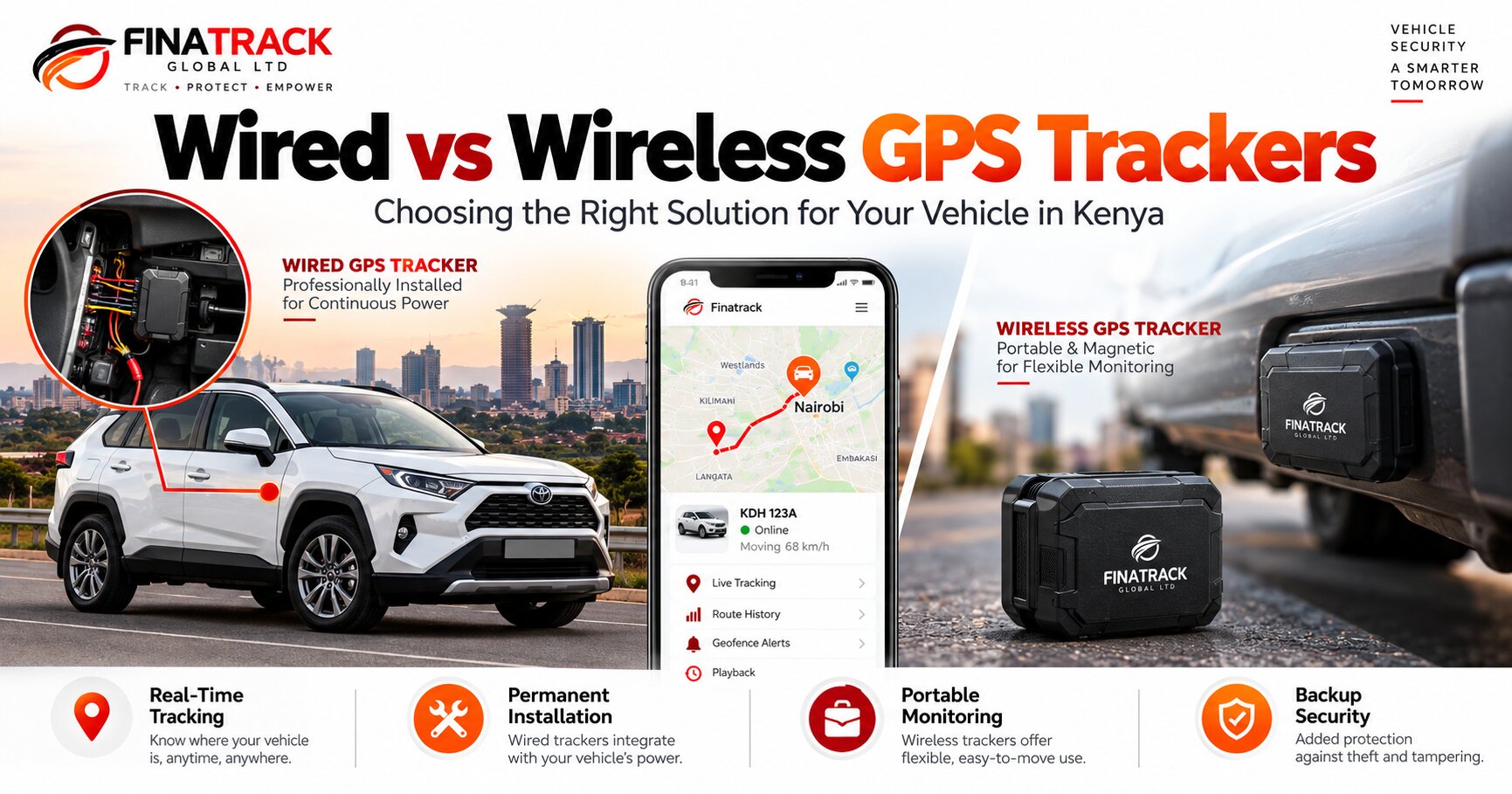
Choosing a GPS tracker is no longer simply about deciding whether to track a vehicle. The bigger question for many motorists and businesses is which type of tracker best suits the way the vehicle is used. Wired and wireless GPS trackers both provide location monitoring, but they operate differently, are installed differently and serve different needs. Understanding those differences can help vehicle owners avoid buying a solution that looks convenient at first but does not match their actual security or monitoring requirements.
A wired GPS tracker is permanently connected to the vehicle’s electrical system and is designed for continuous day-to-day monitoring. Because the device draws power from the vehicle, the owner does not need to keep removing it for charging. Once installed professionally, it can remain discreetly positioned inside the vehicle while continuously sending location and movement information to the tracking platform. This makes wired trackers particularly suitable for private cars, company vehicles, taxis, delivery vans and commercial vehicles that require regular monitoring.
Finatrack Global Ltd offers a wired GPS tracker at KSh 15,000 as a one-off payment, while customers who prefer a lower initial cost can choose an option of KSh 10,000 installation plus KSh 3,000 annual subscription. Depending on the system configuration, a wired tracker can provide access to real-time tracking, historical route playback, geofencing, speed monitoring, ignition alerts and remote immobilisation. These features make the device useful not only for vehicle security but also for motorists who want a better understanding of how and where their vehicles are being used.
The main strength of a wired tracker is continuity. Once the vehicle is in use and the system is operating normally, the tracker remains connected without the owner having to remember to recharge it. This is especially important for businesses managing several vehicles because a fleet manager needs information that is consistently available. A company relying on tracking data for route monitoring, driver supervision or operational reports generally benefits from a system that works as part of the vehicle rather than as a portable accessory.
Wireless or magnetic GPS trackers serve a different purpose. Instead of depending on permanent wiring, they operate using their own battery and can be positioned in suitable locations depending on the design of the device. Finatrack Global Ltd provides a wireless or magnetic GPS tracker at KSh 15,000, offering motorists a more flexible tracking option where permanent installation may not be preferred.
The portability of a wireless tracker can be one of its biggest advantages. A vehicle owner may move the device between suitable assets or use it in situations where wiring into the vehicle is impractical. For businesses, a wireless tracker can also be useful when monitoring vehicles, trailers or equipment that may not require a permanently installed tracking system. The owner should, however, pay attention to battery life because a wireless device will eventually require charging or battery maintenance depending on how frequently it reports its position.
For some motorists, the strongest security approach is not choosing between wired and wireless tracking at all, but using both. A professionally installed wired tracker can serve as the main day-to-day tracking system while a separately positioned wireless tracker provides a second layer of monitoring. If the primary device stops reporting or is interfered with, the backup tracker may still provide another source of location information.
This layered approach is particularly useful for high-value vehicles, commercial trucks and cars that spend long periods away from the owner. No tracking device should be treated as completely immune to damage, interference or communication problems, and relying on one unit creates a single point of failure. A secondary device positioned separately can therefore strengthen the overall security setup without replacing the primary tracker.
Installation is another important difference between the two systems. Wired trackers should be installed professionally because they interact with the vehicle’s electrical system and, in some configurations, may also be connected to remote immobilisation functions. Poor wiring can reduce reliability or interfere with normal vehicle systems. A professional installation should therefore include suitable device placement, secure connections, system testing and guidance on how to use the tracking platform.
Wireless trackers are easier to position, but they still require careful placement. A device that is hidden too deeply may experience communication problems, while one that is placed too obviously may be easier to discover. The customer should therefore consider signal performance, security and accessibility for charging when deciding where the device should be positioned.
For private motorists, the choice often depends on convenience. A person who wants continuous tracking with minimal maintenance will usually find a wired tracker more practical. Someone who wants portability, temporary monitoring or an additional backup device may prefer a wireless or magnetic tracker. Motorists with higher security requirements may benefit from combining the two rather than treating them as competing technologies.
The decision becomes even more important for businesses. A company operating several vehicles needs dependable information about routes, vehicle movement and driver activity, which normally makes permanently installed trackers the foundation of a fleet management system. Wireless devices can then be added where temporary monitoring, asset tracking or additional security is required. This allows the business to build a tracking system around operational needs instead of using the same device for every situation.
GPS tracking can also be combined with other Finatrack vehicle security and fleet management solutions. A wired tracker can work alongside a car alarm system, backup tracking tag, fuel monitoring system or AI dashcam to provide different layers of information and security. For a private vehicle, this can mean stronger protection against unauthorised use. For a fleet operator, it can provide a broader view of vehicle movement, driver behaviour and operational activity.
The right GPS tracker is therefore not necessarily the most expensive or the most portable device. It is the one that fits how the vehicle is used. Wired tracking provides permanent monitoring and convenience, while wireless tracking provides flexibility and independence from the vehicle’s electrical system. When used together, the two can also create a more resilient vehicle security setup.
Finatrack Global Ltd provides professional wired and wireless GPS tracking solutions for private motorists, businesses and fleet operators. Installations can be carried out at the company’s offices or at a customer’s convenient location depending on the type of solution required.
For enquiries or professional installation, contact Finatrack Global Ltd on 0723 645 810, visit www.finatrack.co.ke, or visit the company at Vision Plaza, 1st Floor, Office 2, Mombasa Road, Nairobi.