Marketing roadshows remain an important promotional strategy for businesses seeking to reach customers directly across Kenya. From telecommunications companies and financial institutions to manufacturers, supermarkets and insurance providers, organisations regularly invest in branded vehicles, field marketing teams and promotional activities to introduce products to new markets. A typical campaign may involve a branded van travelling through busy shopping centres, residential estates, market towns and commercial areas, with promoters distributing marketing materials and engaging potential customers. However, while businesses carefully plan these campaigns and allocate substantial budgets, many struggle to establish whether their vehicles and field teams actually covered the intended locations.
The challenge becomes greater when a roadshow operates across several counties or involves multiple vehicles. A marketing agency may deploy branded vans to Nairobi, Kiambu, Machakos and Nakuru while the client expects daily reports showing where the campaign took place. Although photographs, attendance sheets and field reports provide useful information, they may not offer a complete picture of vehicle movements. GPS tracking can help businesses monitor roadshow vehicles, review the routes covered and improve accountability for transport activities. When combined with proper campaign documentation, location information can support more reliable reporting and better use of marketing resources.
Why Roadshow Campaigns Need More Than Photographs and Field Reports
A successful marketing roadshow involves several activities that must be coordinated carefully. The campaign manager needs to establish the locations to be visited, organise transport, assign promoters and ensure that branding materials reach the correct destinations. The team may also require permission to operate in selected public or private spaces, depending on the nature of the activation and local requirements. When these arrangements are handled properly, a roadshow can help a business interact with customers who may not otherwise encounter its products through conventional advertising.
However, difficulties arise when management relies entirely on photographs and verbal updates to assess campaign execution. A photograph showing promoters outside a supermarket may confirm that some activity took place, but it does not necessarily explain the movement of the promotional vehicle throughout the day. Similarly, a report stating that a team visited five locations may not establish how much time was spent at each location or whether the vehicle followed the approved route.
Consider a company launching a consumer product through a three-day activation campaign in Nairobi and Kiambu. The marketing agency assigns a branded van to visit Githurai, Ruiru, Juja and Thika, with promotional activities scheduled at selected locations. At the end of the day, the agency submits photographs and a report confirming that the exercise was completed. If the client later requests clarification about the route taken or the order in which locations were visited, the agency may have limited independent information beyond the team’s recollections.
This does not mean that field reports are unreliable or that employees should automatically be suspected of misreporting their activities. Rather, it highlights the importance of combining different forms of operational evidence. GPS tracking provides information about the movement of a vehicle, while campaign photographs, customer interactions and supervisor reports document activities that take place after the team arrives.
How GPS Tracking Can Help Monitor Branded Roadshow Vehicles
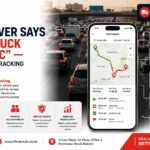
A wired GPS tracking device installed in a roadshow vehicle can provide location information through a compatible monitoring platform. Authorised campaign coordinators may be able to review the vehicle’s latest reported position, examine historical journeys and identify stops recorded during the campaign period. This gives managers an additional way to understand how promotional vehicles are being used, particularly when operating far from the company’s main office.
Imagine a financial services company conducting a marketing roadshow across several towns in Machakos County. The promotional vehicle is expected to begin in Athi River, continue to Mlolongo and complete the day’s activities at selected locations along the route. Through a GPS monitoring application, the campaign coordinator can review available vehicle movements and compare them with the approved itinerary without repeatedly contacting the driver for location updates.
Historical route playback can also help the team assess the campaign after completion. If a vehicle followed a significantly different route from the planned itinerary, management can investigate whether the change resulted from traffic conditions, customer requests, revised instructions or other operational circumstances. This approach encourages informed decision-making rather than immediate assumptions about the driver’s conduct.
However, GPS tracking does not independently establish whether promoters engaged customers, distributed materials or generated sales leads. A vehicle may reach the intended location while the actual activation begins later than expected or is cancelled for legitimate reasons. Businesses should therefore understand that vehicle tracking verifies aspects of transport activity, not the entire marketing campaign.
Why Location Coverage Matters When Measuring Roadshow Performance
Marketing campaigns are often assessed using indicators such as the number of locations visited, customers engaged, leads collected and enquiries generated. For roadshows, geographical coverage is particularly important because businesses select promotional locations based on target audiences, accessibility and expected customer activity.
A company promoting agricultural products, for example, may organise an activation campaign targeting specific trading centres and farming communities. Visiting the wrong locations could reduce the effectiveness of the campaign, even if the promotional team works diligently throughout the day. Similarly, a business launching a new service in Nairobi may prioritise particular estates or commercial areas where prospective customers are more likely to be found.
GPS route records can help establish whether a promotional vehicle travelled through the intended geographical areas. A campaign manager can compare recorded vehicle movements with the approved schedule and identify locations that may require follow-up visits. This information can also support future planning by highlighting excessive travel between activation points or locations that are difficult to reach within the allocated time.
Nevertheless, geographical coverage should not be confused with marketing effectiveness. A vehicle spending three hours at a shopping centre does not prove that the campaign generated meaningful customer engagement. The business still needs properly documented leads, customer feedback and other relevant performance measures to evaluate the success of the activation.
The real benefit arises when operational information and marketing results are considered together. Management can then assess not only where its resources were deployed but also whether those locations produced the intended outcomes.
Can GPS Tracking Help Control Roadshow Transport Expenses?
Transport can account for a substantial portion of the cost of a marketing roadshow, particularly when campaigns involve branded trucks, sound equipment, promotional materials and several field employees. Fuel, vehicle hire, driver allowances, accommodation and maintenance expenses may increase as the campaign expands to more locations. When routes are poorly coordinated, a business may incur unnecessary travel costs without achieving additional customer coverage.
Consider a promotional vehicle assigned to visit several shopping centres around Nairobi. If the locations are arranged without considering their proximity, the driver may repeatedly cross the city, consuming additional fuel and spending valuable campaign time in traffic. By reviewing previous journey records, organisers may identify opportunities to schedule future activations in a more practical geographical order.
GPS tracking can provide route history and movement information that helps explain how vehicles were used during the campaign. Managers can compare estimated distances travelled with the planned itinerary and investigate unusually long journeys. Businesses operating multiple roadshow vehicles may also review whether the available fleet is being allocated efficiently.
However, location tracking alone does not calculate the complete cost of a campaign. Accurate financial evaluation still requires fuel records, vehicle hire expenses, employee payments and other relevant expenditure. Businesses with more demanding fleet requirements may consider compatible fuel monitoring solutions where the potential operational value justifies the additional investment.
For marketing agencies working with corporate clients, having organised movement records can also make it easier to explain legitimate route changes and demonstrate that transport activities were managed professionally.
How Mobile Phone Tracking Can Support Field Marketing Teams
Roadshow campaigns involve more than the vehicle itself. Marketing teams may leave the branded van to visit shops, distribute promotional materials or speak with customers in surrounding areas. This creates a coordination challenge because the campaign supervisor may need to communicate with several promoters working at different locations.
A mobile phone tracking application can provide location information from compatible devices where monitoring has been properly authorised and configured. This may help a team coordinator understand the reported positions of field employees during legitimate work assignments, particularly when staff operate across a large activation area.
For example, a promotional team conducting an activation in Thika may have representatives visiting nearby businesses while the roadshow vehicle remains parked at an approved location. With appropriate communication procedures and authorised phone location sharing, the coordinator may find it easier to arrange meeting points or reassign team members to scheduled activities.
Employee privacy must remain an important consideration. A company should clearly explain why location information is collected, who can access it and when monitoring is necessary. Tracking should be limited to legitimate operational requirements and conducted in accordance with applicable data protection obligations. The fact that an employee uses a company phone does not automatically justify unrestricted monitoring of their personal movements.
Finatrack Global Ltd offers a Mobile Phone Tracker App for compatible devices at KSh 2,999 per phone annually, with a five-phone package available at KSh 9,999 annually. Businesses considering the application should confirm its supported features and available access controls before implementation.
How Much Does GPS Tracking for Marketing Roadshows Cost in Kenya?
For companies and agencies operating branded promotional vehicles, a wired GPS tracker can provide a practical starting point for monitoring vehicle movements. The appropriate tracking arrangement depends on the number of vehicles, campaign duration and frequency of reporting required.
At Finatrack Global Ltd, our Wired GPS Tracker is available at KSh 15,000 through a one-off payment arrangement without an annual tracking subscription. Customers can alternatively choose KSh 10,000 for installation plus KSh 3,000 annually. The solution supports vehicle location monitoring, historical route playback, geofencing and selected security notifications, depending on the device configuration.
A marketing agency operating its own roadshow vehicles may benefit from permanent tracking installations because the same vehicles can be used across several campaigns. Businesses that hire promotional vehicles for short periods should first establish who owns the vehicles, whether tracking equipment can be installed and what arrangements govern access to location information.
For companies managing both roadshow vehicles and authorised field teams, combining vehicle tracking with suitable mobile phone tracking may improve operational coordination. However, the technology should form part of a broader campaign management process that includes schedules, approved routes, supervisor reports and measurable marketing outcomes.
Make Every Marketing Roadshow More Accountable With Finatrack Global Ltd
Marketing roadshows require significant planning, financial investment and coordination. Businesses must ensure that promotional vehicles reach the intended locations, field teams understand their assignments and customers receive the experience promised by the campaign. When organisations lack reliable information about vehicle movements, evaluating how transport resources were used can become difficult.
GPS tracking offers an additional source of operational information by allowing authorised managers to review vehicle locations, historical routes and selected movement notifications. When combined with campaign reports, photographs, customer engagement records and proper financial controls, this information can help organisations assess their roadshow operations more effectively.
Finatrack Global Ltd provides GPS tracking and mobile phone monitoring solutions for businesses, marketing agencies and organisations operating field teams across Kenya. Our Wired GPS Tracker costs KSh 15,000 as a one-off payment, with an alternative package of KSh 10,000 installation plus KSh 3,000 annually. Our Mobile Phone Tracker App is available at KSh 2,999 annually per phone, or KSh 9,999 annually for five phones.
For enquiries and professional installation, contact Finatrack Global Ltd on 0723 645 810, visit our office at Vision Plaza, 1st Floor, Office 2, Mombasa Road, Nairobi, or visit www.finatrack.co.ke.
A successful roadshow is not simply about sending a branded vehicle onto the road. It is about knowing where your resources were deployed, understanding what activities took place and making every campaign more accountable.